
Could This Beef Stew Recipe Be the Key to Your Dog’s Happiness?
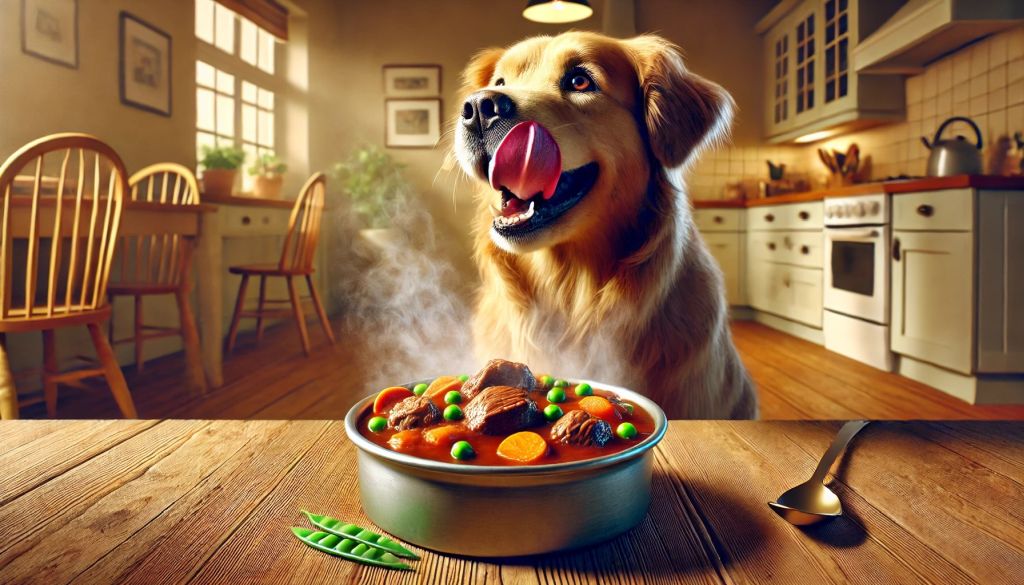
Does your pup love a hearty meal? Barking Good Beef Stew might be the perfect treat for them.
When you make food for your dog at home, you know every ingredient is fresh and healthy.
This stew can be a nutritious addition to your pup’s diet, providing the right balance of proteins and essential nutrients.
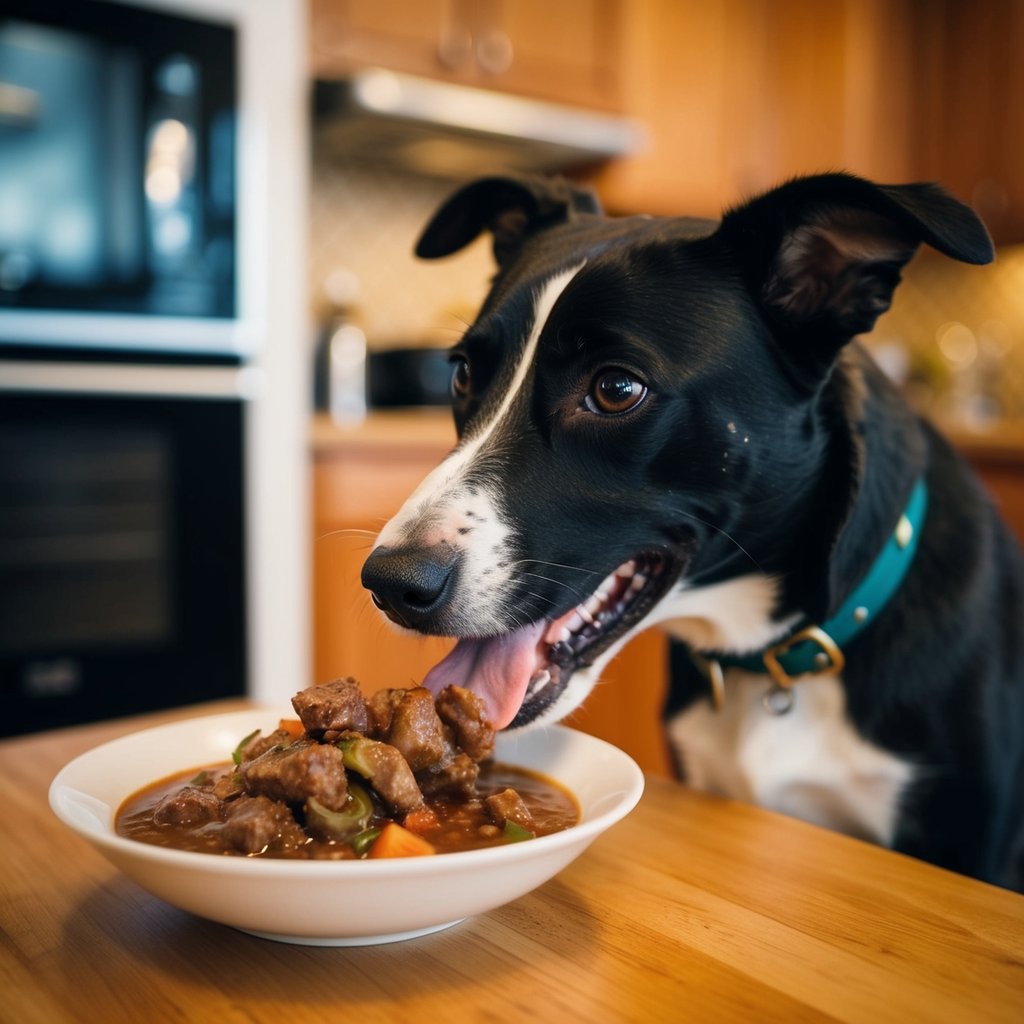
Crafted with love and care, beef stew for dogs blends tasty beef with vegetables like sweet potatoes and spinach. It’s not just about flavor—it’s about giving your pup something wholesome that they’ll enjoy.
This meal is simple and quick to prepare with ingredients you can easily find.
You can enjoy peace of mind knowing exactly what goes into your pup’s bowl. This brings a sense of connection as you prepare a meal you and your dog can share. It’s more than a recipe; it’s a way to bond over delicious and healthy food.
Benefits of Homemade Dog Food
Making homemade dog food comes with many perks. It allows you to select fresh ingredients, manage potential allergens, and tailor serving sizes for your dog’s needs.
This approach ensures a balanced diet that suits your furry friend’s health and lifestyle.
Nutritional Advantages
When you prepare homemade meals for your dog, you control what goes into each dish. You can include high-quality proteins, fresh vegetables, and whole grains. Doing so lets you ensure your dog gets a balanced diet of essential vitamins and minerals.
You can focus on lean proteins like chicken or fish and healthy carbohydrates like brown rice. You might add vegetables like carrots or peas for fiber and essential nutrients. This way, your dog enjoys a delicious and healthy meal.
Customizing your dog’s food means you avoid filler ingredients often found in commercial pet food. Over time, feeding your dog homemade meals can positively impact their energy levels and overall health.
Allergy Management
Homemade dog food is an excellent option if your dog suffers from allergies. You can leave out ingredients that trigger reactions while keeping meals tasty and nutritious. Dogs can have allergies to common commercial food additives or certain meats.
By paying close attention to what bothers your dog, you can create a safe diet for them. Foods like lamb or duck can be used for sensitive pups who might not tolerate chicken or beef well.
With homemade meals, you monitor your dog’s health better as changes are easier to notice. It’s essential to consult with your vet to get a clear plan if allergies are a concern.
Portion Control
Tailoring portion sizes to fit your dog’s age, breed, and activity level is another benefit of making their food at home.
You can adjust serving sizes so your pup gets what they need without overeating. This helps maintain a healthy weight and contributes to their overall well-being.
A simple guide is to provide about ½ cup of food per 20-25 pounds of body weight, but adjusting based on your dog’s daily activities is a good idea.
Discussing specifics with your vet ensures you’re feeding the right amount. Homemade dog food offers the flexibility to keep your dog healthy and happy.
Barking Good Beef Stew Ingredients
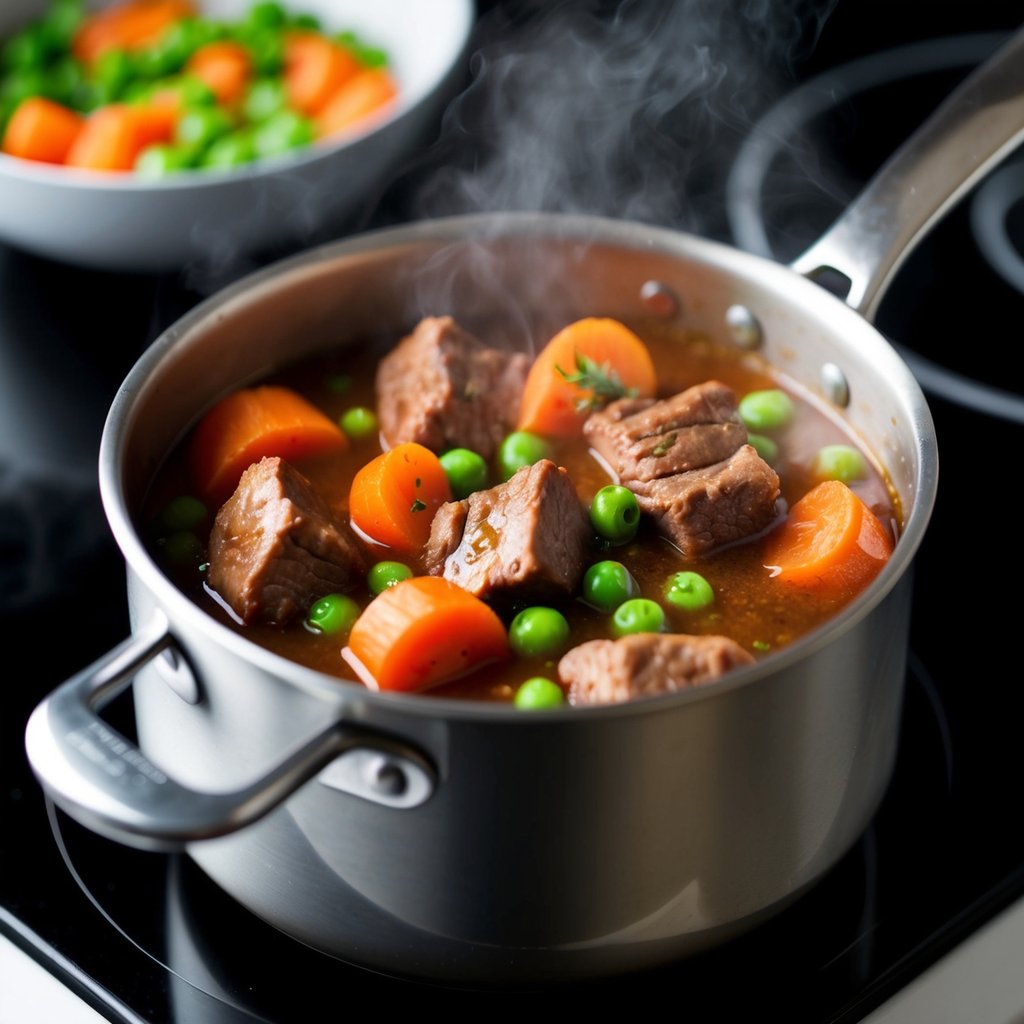
Creating a nutritious beef stew for your pup involves choosing high-quality beef and fresh vegetables and considering healthy options for substitutions. This ensures a balanced meal packed with the nutrients your furry friend needs.
Choosing the Right Beef
Lean cuts like sirloin or chuck are great options when selecting beef for your pup’s stew. They provide protein without too much fat.
Fat content is essential: too much can upset your dog’s stomach. Trim excess fat from the meat before cooking to prevent any digestive issues.
Opt for beef that’s free of additives and preservatives. If possible, choose organic or grass-fed beef. These tend to have fewer chemicals and more natural nutrients.
Fresh Vegetables and Their Benefits
Incorporating fresh vegetables like carrots and green beans boosts the stew’s nutrition. Carrots are rich in beta-carotene and fiber, which support your dog’s eye health and digestion.
Green beans are low-calorie and packed with vitamins like A, C, and K. They also offer a crunchy texture that many dogs enjoy.
Avoid veggies like onions and garlic, which are harmful to dogs. Instead, add safe options like peas and sweet potatoes for additional vitamins and minerals.
Healthy Additions and Substitutions
Consider adding wholesome grains like brown rice or oats for extra fiber. These grains are gentle on the stomach and help maintain healthy digestion.
If your pup has dietary restrictions, substitute beef with protein-rich options such as chicken or turkey. Always consult your veterinarian before introducing new ingredients.
Broth can also add flavor — use low-sodium, homemade broth to ensure it’s safe for dogs.
Add plain yogurt or flaxseed oil for a nutritional boost. These additions can improve coat health and aid digestion, making your pup’s meal even more beneficial.
Cooking Your Beef Stew
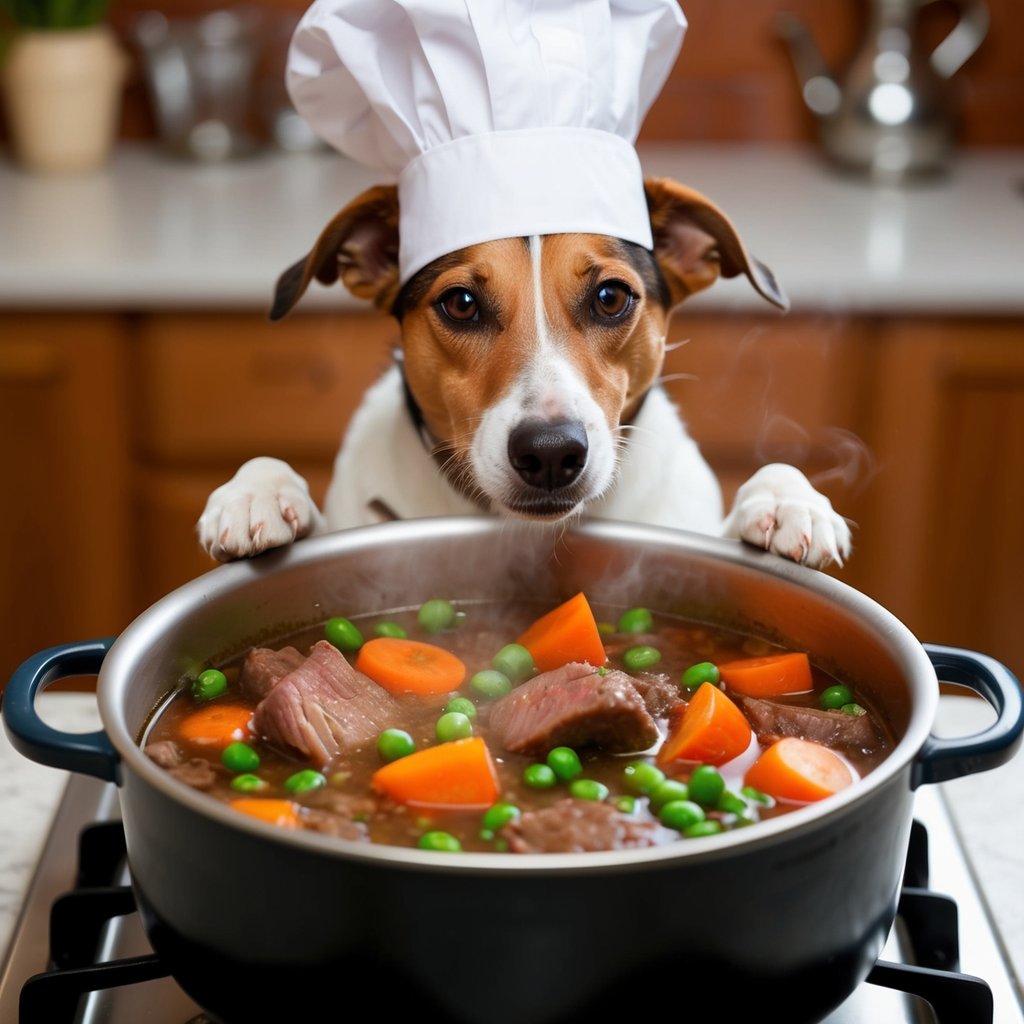
Creating a delicious beef stew for your pup involves selecting the right ingredients, following a simple cooking process, and ensuring the meal is safe for your dog. This section will guide you through each step to ensure you’re doing it right while keeping your furry friend’s health in mind.
Preparing the Ingredients
Start by gathering the freshest beef available because quality is key. Select lean cuts, like stew meat or round, because they have less fat. Dice the beef into bite-sized pieces to make it chewable for your dog.
Next, choose a mix of safe vegetables like carrots and sweet potatoes. Cut them into small pieces, too. Avoid onions and garlic as they are harmful to dogs. A dash of herbs like parsley can add flavor without any danger.
Step-by-Step Cooking Process
Begin by browning the beef in a skillet with a small amount of vegetable oil. This enhances the taste and seals in the juices. Once the beef is browned, transfer it to a large pot.
Add your chosen vegetables to the pot and enough water to cover everything. Let it simmer on low heat for several hours until the beef and veggies are tender. Avoid using salt or spices, as these can harm your dog.
Safety Tips for Cooking Dog Food
When cooking for your dog, it’s essential to prioritize safety. Avoid adding ingredients like onions, garlic, or too much seasoning, as these can upset your dog’s stomach. Ensure the stew is cooled correctly before serving to prevent burns.
Keep portions appropriate to your dog’s size and dietary needs. Always consult your veterinarian if you’re unsure about introducing a new type of food into your dog’s diet. When storing leftovers, refrigerate them within two hours and use them within a few days to maintain freshness and safety.
Serving and Storage
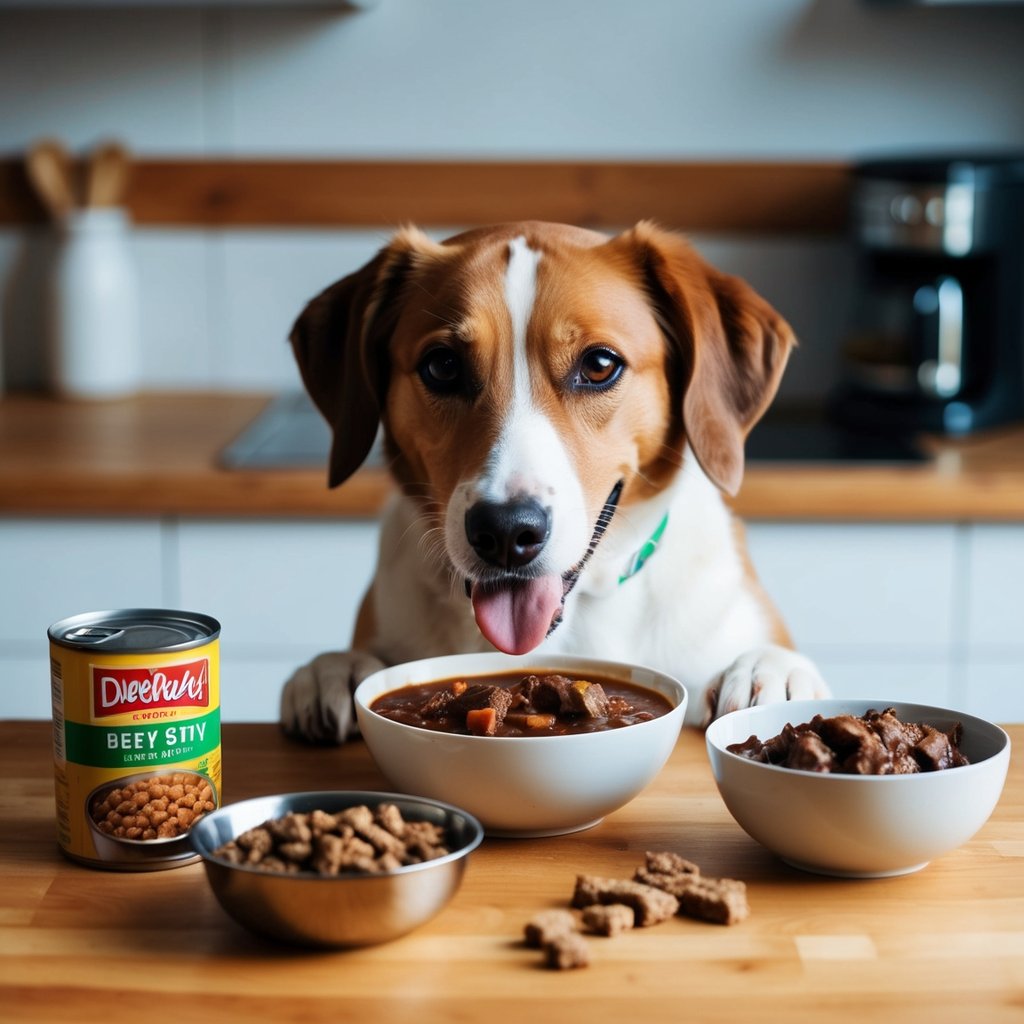
When preparing beef stew for your dog, it’s essential to know how much to serve and how to store leftovers. These tips will help ensure your pup enjoys a delicious and safe meal every time.
Portion Sizes for Your Pup
Portion control matters when serving beef stew to your dog. The right amount of food depends on your dog’s size, age, and activity level. Generally, a dog’s meal should be about 1/2 to 2 cups of food per 10 pounds of body weight daily.
Make sure to adjust the portions based on your dog’s specific needs. Active dogs may need more, while less active dogs require smaller portions.
Portioning can be made easy by dividing the stew into single-serving containers after cooking. This ensures you’re giving the right amount and makes mealtime quick and straightforward.
Always observe how your dog reacts to the portion size, adjusting as necessary to maintain a healthy weight. Too much food can lead to unhealthy weight gain, so monitoring your dog’s condition regularly is good.
Storing Leftovers Safely
After feeding your pup, ensure any leftover beef stew is stored correctly to keep it fresh. Store the stew in airtight containers to keep moisture and bacteria out. Label each container with the date to remember how old it is.
Refrigerate the stew if you plan to use it within a few days. For more extended storage, consider freezing. Be mindful that beef stew is highly perishable and should not be left at room temperature for long periods. Leftovers left out can spoil quickly.
When reheating, ensure the beef stew is warmed thoroughly but cooled down before serving again. This protects your dog from any harmful bacteria in stored food.
Understanding Your Dog’s Dietary Needs
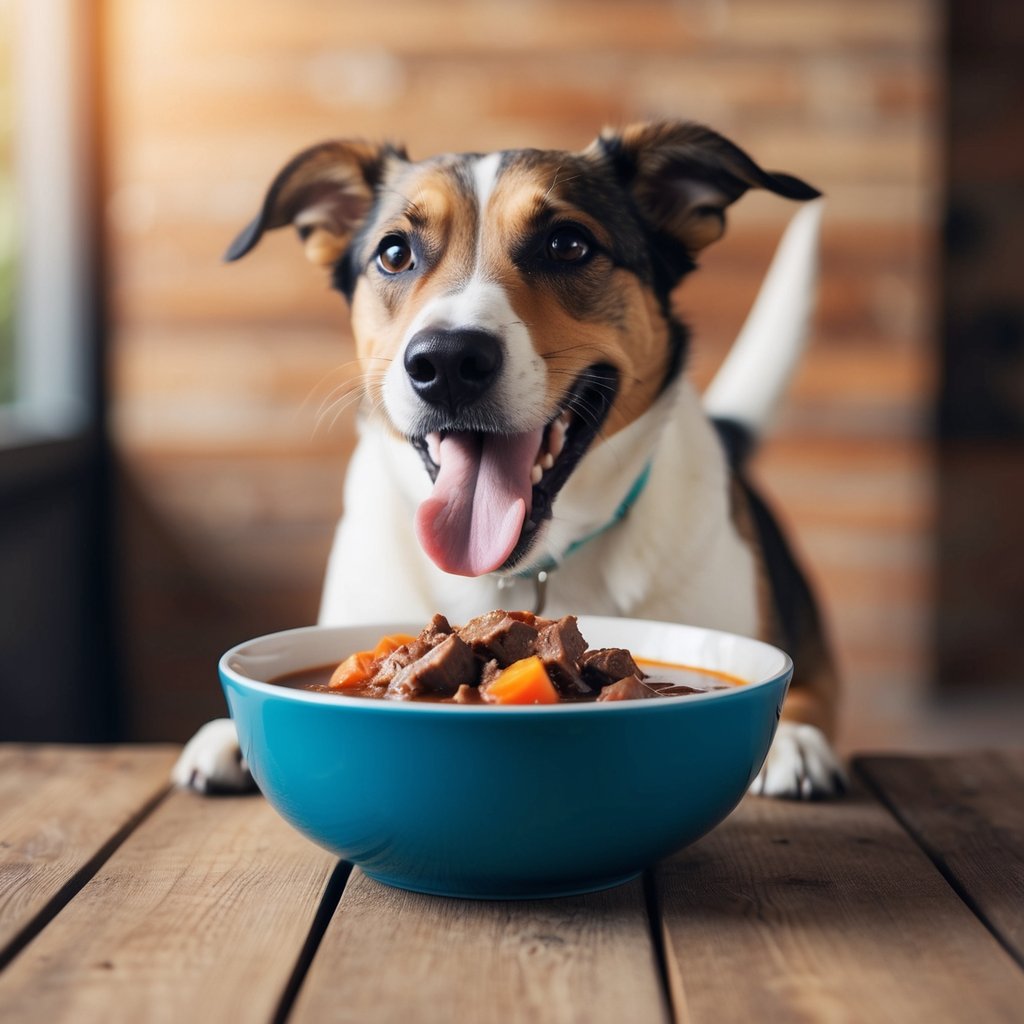
Meeting your dog’s nutritional requirements is essential for their health. Age, weight, and activity level can influence what your dog should eat. Consulting with a vet ensures you provide a diet supporting their well-being.
Consulting with a Vet
Talking with a vet is essential before switching your dog’s diet or adding new foods. A vet can explicitly help you understand what nutrients your dog needs. This guidance can prevent any issues related to allergies or sensitivities.
A vet may suggest specific proteins or vegetables based on your dog’s health.
Also, if you’re considering giving your dog beef stew, consulting with a vet can help determine its suitability. You might find that some store-bought options aren’t the best due to added ingredients, so a vet’s advice is essential for ensuring safety and nutrition.
Age-Specific Nutrition
Your dog’s age significantly impacts their dietary needs. Puppies usually require a diet rich in protein and calories to support rapid growth.
On the other hand, adult dogs benefit from balanced diets with the right amount of protein and fat to support healthy muscles and energy levels.
For senior dogs, a diet lower in calories but still rich in nutrients is often best to maintain muscle mass without adding extra weight. This can help manage conditions like arthritis or obesity.
Each life stage has unique dietary requirements, making it vital to adjust their meals over time to promote health and longevity.
Conclusion
When serving beef stew to your dog, keeping a few things in mind is essential. Start using fresh, high-quality ingredients and avoid harmful additives like onions and garlic. These can be harmful to your pup.
Always remember to feed your dog beef stew in moderation. Though it’s a tasty treat, it should not replace their balanced, commercial dog food. A gradual introduction will help prevent tummy troubles.
If you’re making homemade beef stew, check with your vet to ensure it meets your dog’s dietary needs. This helps you provide a nutritious meal that your furry friend will love.
Key Ingredients to Include:
- Lean cuts of beef
- Carrots and peas
- Brown rice or barley
Avoid any store-bought beef stew unless you know it’s safe for dogs. Many come with ingredients dogs should not eat. To know more about this, consider checking how store-bought beef stew is evaluated for dogs.
Your dog’s health is a priority, so always observe any changes in their behavior or digestion when introducing new foods. Treat your pet with love and tasty, safe meals!
A Call to Action
You’re probably wondering how beef stew plays into your dog’s nutrition—the secret lies in actin, a protein found in beef. Actin is essential for maintaining healthy muscles in your pup.
If you’re making beef stew at home, you’re providing a delicious source of protein. High-quality beef offers actin, helping your furry friend stay strong and active.
Here’s a simple tip: while preparing the stew, add ingredients that complement beef. Consider carrots, peas, and a bit of pumpkin. These veggies add fiber and vitamins, making the meal perfect for your dog.
Cooking the beef properly is just as important. Use a slow cooker on low heat for a few hours. This makes the beef tender and easier for your dog to digest. Avoid adding onions or garlic as they can be harmful to dogs.
Ingredients Checklist:
- Lean ground beef
- Carrots (chopped)
- Peas (fresh or frozen)
- Pumpkin purée
When combined, these ingredients create a stew packed with nutrition. You can ensure your dog gets a balanced meal, rich in protein and vitamins.

Elizabeth Redd has been in Washington, D. C. since 1970. Welcome to "Pooch Wellness Path," your trusted guide to enhancing the well-being of your cherished furry friends. At the heart of our community lies a commitment to holistic wellness, combining comprehensive care with unconditional love.
We're here to offer you the latest nutrition, fitness, mental health, and preventive measures, lighting the way to peak health for your pet. Dive into our thriving network of dog lovers, where the happiness of our companions takes center stage.
We're all about sharing groundbreaking wellness tips and nurturing an environment where every dog thrives. Step into Pooch Wellness Path, where each joyful bark and wag is a testament to thriving health.

