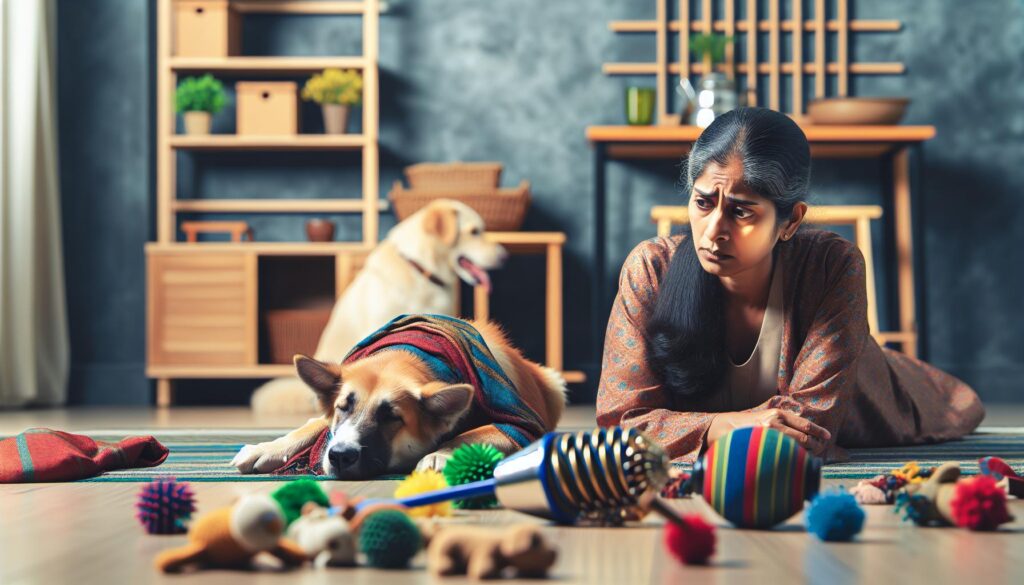
Teaching your dog basic obedience commands like ‘sit’ and ‘stay’ isn’t just about showing off your pet’s good manners. It’s also about keeping them safe and well-behaved. A well-trained dog is a happy dog, and that’s something every pet owner strives for.
Training might seem daunting at first, but it’s simpler than you might think. With a little patience and consistency, your furry friend will be following your commands in no time. And remember, it’s not just about discipline – it’s about strengthening the bond between you and your pet.
So, whether you’re a first-time dog owner or just looking to brush up on your pet’s manners, this guide is for you. Let’s dive into the world of dog training and discover how to teach your dog the basic commands of ‘sit’ and ‘stay’.
Understanding the Importance of Training
Perhaps the most significant aspect of dog training is the profound way it enhances the bond between pet and pet owner. Yes, it’s about discipline and setting boundaries; no dog owner wants their pet to misbehave. But it’s also fundamentally communication with your furry friend.
When you invest the time to train your dog in basic commands like ‘sit’ and ‘stay’, you’re actually opening up a line of communication that goes both ways. By setting consistent rules and expectations, you allow your dog to better understand your behavior rather than just respond to it. This fosters a sense of trust and security in your pet.
Furthermore, training your dog contributes greatly to their mental stimulation. Dogs, much like humans, need activity — both physical and mental — to lead a healthy, fulfilling life. Training provides that mental exercise. Every time your dog heeds your ‘sit’ or ‘stay’ command, they’re exercising cognitive energy. It becomes an engaging game for them, maintaining their focus while providing a valuable learning experience.
There’s another essential aspect to consider: the safety of your pet and those around it. A well-trained dog is less likely to get into threatening situations, or pose a threat to others. Basic commands like ‘sit’ and ‘stay’ can control potentially harmful behaviors, making public spaces safer for everyone — dogs and humans alike.
Training isn’t about exerting dominance or displaying power — it’s a tool for development, understanding, and trust building in your unique relationship with your pet. It may require your time, effort, and patience, but the rewards of an obedient pet and a strengthened bond make all it worthwhile.
While you might encounter challenges along the way, rest assured that it’s simpler than you think. As you persist in training, every small success with commands like ‘sit’ and ‘stay’ brings you one step closer to a better understanding and deeper connection with your beloved pet. Let’s continue exploring how to successfully instil these commands in the next part of this guide.
Getting Started: Creating a Positive Environment

One essential factor to consider when starting dog training is the environment. Ensuring a positive and stress-free environment can yield better results. Dogs, much like humans, thrive in environments that are encouraging, happy, and safe.
When she starts to train her dog, the owner should pick a quiet, familiar place free from distractions. This setting allows the dog to focus on the owner and the task at hand. It’s essential to eliminate potential disturbances that can hinder the dog’s concentration.
Moreover, consistency is key in establishing this training environment. That’s why it’s critical to maintain the same training area each time. The dog may associate this area with learning, which could assist in keeping his focus on training.
Another important part of creating a positive environment is using positive reinforcement. Praising the dog when he performs the desired behavior correctly encourages him to repeat this behavior. Positive reinforcement doesn’t only have to be verbal; tasty treats, playful toys or a quick game often works just as well.
In terms of the owner’s attitude and behavior, she should be patient and substitute frustration with encouragement. Training doesn’t happen overnight, and it’s important to keep in mind that every dog learns at his own pace. The owner should offer consistent, clear signals that helps the dog understand what is expected of him.
Finally, the dog’s overall well-being should be monitored. He should be physically healthy for training, as illness or discomfort can influence his ability to concentrate. Also consider their mental well-being: a happy, well-rested dog will be more responsive in training.
In the next section, we’ll venture onto a more practical level where we’ll discuss some basic commands to start with, starting from ‘sit’ and ‘stay’. Remember, it’s all about maintaining a positive, consistent environment where both the owner and pet enjoy the learning process.
Teaching the ‘Sit’ Command

Embarking on this training journey can feel like a challenge. But don’t worry, it’s really quite simple if done properly. First things first, you’ll need to find a location that’s familiar and quiet. This ensures that the dog feels safe and can concentrate. Got a place in mind? Excellent, let’s move on to the most essential part: the ‘sit’ command.
To teach the ‘sit’ command, an owner’s to be really tuned into the reactions of their pup. Start by holding a treat high above the dog’s head. Naturally, the pup’s likely to tilt its head upward to follow the treat. When the muzzle points up, the rump will usually go down. At this point, toss in a clear ‘sit’- just a simple word with no other linguistic trimmings or distractions.
The key to nailing this? Consistency. Use the same word, the same tone, and the same gesture each time. Multiply these by ample repetitions, and in no time, the pup will start to understand that ‘sit’ means ‘put your bottom on the floor’. And it doesn’t just end here!
When the dog sits, it’s vital to reward them immediately with the treat and lots of praises. This positive reinforcement makes the act of sitting a pleasurable experience for the pup. And who wouldn’t want to repeat an experience that feels good?
It’s important to note that pups might not get it right immediately. That’s Okay. Training’s just as much about bonding as it is about discipline. It’s a chance for the pup to engage, to learn a new language – your language. So, go ahead, take your time. Relish the process, the training is really not just about the outcome.
One more thing, patience is key in the training process, despite the ups and downs. With a generous heap of patience and buckets full of encouragement, the ‘sit’ command is within the pet’s reach.
In case you’re curious, the next section will deal with teaching the ‘stay’ command. The two commands go hand in hand, after all. But that’s a topic for later. Right now, focus on mastering ‘sit’ with your furry pal.
Mastering the ‘Stay’ Command
Now that you’ve managed to successfully teach your dog the ‘sit’ command, it’s time to progress to the ‘stay’ command. This command is crucial for their safety and your peace of mind. Imagine the convenience of being able to leave your dog for a moment while you chat with a neighbor, checkout at a grocery store, or answer the doorbell. The ‘stay’ command makes all of this possible. But similar to the ‘sit’ command, teaching ‘stay’ requires patience, consistency, and positive reinforcement.
To begin training your dog to stay, first, make sure they are in a familiar and quiet environment devoid of distractions. The situation should be structured such that your dog can give you their full attention, which is half the battle won. Then, ask your dog to sit before you introduce the ‘stay’ command.
Once the dog is sitting, show them an open palm and say ‘stay,’ then pause for a few seconds. Make sure to use the same tonality and hand gesture each time to help your furry friend understand what you’re asking of them. Remember, repetition breeds familiarity and this familiarity will ultimately lead to comprehension.
If your dog remains seated after you say ‘stay,’ reward them with praise and a treat. Appreciation for good behavior encourages repetition of that behavior, so it’s always a good idea to recognize and reward your dog’s successes.
However, if your dog tries to follow you after the command is given, calmly place them back into the ‘sit’ position and repeat the ‘stay’ command. The intent here is not to punish the dog, but rather continue to teach them what’s expected of them.
As your dog gets more successful at staying put for short periods, gradually increase the duration you want them to ‘stay.’ This process might take time and requires a lot of patience. Keep the training sessions short, fun, and positive to ensure they don’t become stressful or tiresome for your four-legged friend.
Remember, each dog learns at their own pace. So, do not rush the process or get frustrated. Consistent practice in a relaxed environment will yield the best results for both you and your pooch. During this part of the training, you might encounter some setbacks, but it’s essential to persevere. After all, learning doesn’t equate to uniformity.
Strengthening the Bond: Reward-Based Training

Reward-based training, such as the use of treats and praises, is a positive reinforcement technique that can be extremely effective when teaching a dog obedience commands like ‘sit’ and ‘stay’. Dogs are inherently motivated by reward and attention, so why not use this to the owner’s advantage during training sessions?
A dog learns to associate performing specific actions with receiving rewards and praise. This connection teaches the dog to repeat the commands they’ve been given in anticipation of the reward. To encourage the desired behavior, an owner needs to issue the reward or praise immediately after the dog performs the command.
Reward-based training is not just about teaching dogs new commands—it’s about strengthening their bond with their owners. Dogs are very observant: they notice and remember how their owners react when they perform specific actions that are pleasurable to them. This bond between dogs and their owners can play a key role in training and reinforcing obedience commands.
| | Reward-Based Training |
|———-|———————————————————————————|
| Why | Dogs are inherently motivated by rewards and attention. |
| What | Owner issues rewards or praises right after a dog performs the command requested. |
| Impact | Strengthens the bond between dogs and their owners. |
It’s essential to note that the type of reward can vary based on the dog’s preference. Treats and food are often the go-to choices especially during early training. However, toys, praises, or even a cheerful smile and a belly rub can serve as excellent rewards. The key here is to understand what motivates a dog the most to ensure reward-based training is as effective as possible.
An owner can start by experimenting with different rewards when teaching a dog to sit and stay. Observe their reaction to figure out what gets them jazzed up the most. The reward chosen will play a crucial role in obedience training success hence the need to choose wisely.
Remember, the tone and energy level during training also matter. Dogs can pick up on their owner’s energy. If an owner is excited and cheerful during training sessions, the dog will most likely mimic these positive vibes and benefit from the training.
Lastly, it’s crucial to be consistent with reward-based training. Dogs learn by repetition and reinforcement, so the reward needs to be consistently provided each time the dog performs a certain command.
Overcoming Challenges and Common Mistakes

Despite the advantages of reward-based training for dogs, certain challenges and common mistakes can dampen the process. It’s essential to recognize these to ensure effective obedience training.
One common pitfall in dog training is inconsistency. By staying consistent with commands, rewards, and expectations, the dog can understand and follow commands better. If one day, you’re treating your dog for sitting, and the next, you forget to reward them, it sends mixed signals. The dog might not understand whether “sit” means it should sit or not. Consistency is key in dog obedience training.
Moreover, in the eagerness to get their dogs to learn quickly, many owners might overdo the commands. It’s crucial to introduce one command at a time. Avoid overwhelming your dog with multiple commands – it not only confuses the dog but might also lead to the pet developing a disobedience attitude.
Timing of the reward is another aspect that often goes wrong. The reward must occur immediately after the command is followed correctly. If you delay the treat, your dog may not understand what it was for.
Impatience during training sessions could also lead to problems. Remember, dogs, like humans, have their own learning pace. Being patient, kind, and gentle enhances the bond and makes the learning a positive experience for your dog.
An often overlooked challenge is the dog’s environment. If there are too many distractions, it can hamper your dog’s ability to focus. Training should occur in an environment with minimal distractions. Bears in mind that dogs associates actions with environments. Hence, dog owners should gradually introduce more challenging environments once the command is well established.
Always remember, your dog is trying as hard as you are during training. Adjust your training methods as need be to match your dog’s unique personality and preferences. You’ll enjoy this journey towards helping your dog become a well-behaved family memeber who understands and obeys commands.
Taking Training to the Next Level: Adding Distractions

So they’ve mastered the basic commands in a quiet, distraction-free environment? That’s fantastic! But truth be told, the real world is anything but distraction-free. So, how do you transition your training sessions from a controlled setting to one more representative of everyday life? And more importantly, how do you ensure that your dog still responds to commands in the face of distractions?
Start by introducing distractions gradually into your training sessions. It could be as simple as a bouncing ball, a favorite toy, or even a family member wandering in and out of the room. Ensure that these new elements are manageable for your dog at first. The aim is not to overwhelm them, but to accustom them to perform effectively despite possible distractions.
As they show success and increase their level of comfort with small distractions, you can start to include more prominent ones in the background. Try moving your training sessions to places with more stimuli, like your local park or a busy street. Remember to reward your dog every time they successfully follow a command amidst distractions. Their success should be acknowledged and celebrated!
It’s crucial to maintain consistency during this process. Your commands, rewards, and expectations should remain unchanged regardless of the environment. Your dog needs to understand that “sit” means “sit,” whether they’re in the tranquility of your living room or the bustling environs of the dog park. Remember, the goal here is to help your dog generalize these commands, not just execute them in isolation.
Critically, this higher level training demands not just more patience and kindness from you, but also an elevated grasp of your dog’s unique personality and preferences. Knowing your dog’s limits, and pushing them gradually, could make or break their success in the face of distractions.
Conclusion
So there you have it. Teaching your dog basic obedience commands like ‘sit’ and ‘stay’ isn’t just about the commands themselves. It’s about knowing your furry friend, understanding their unique personality, and using that knowledge to gradually push their limits. It’s about introducing distractions slowly, making sure they’re manageable for your dog. And most importantly, it’s about keeping things consistent – the commands, the rewards, and the expectations. Remember, patience and understanding go a long way in dog training. And the bond you’ll build with your dog during this process? That’s the true reward. Happy training!

Elizabeth Redd has been in Washington, D. C. since 1970. Welcome to "Pooch Wellness Path," your trusted guide to enhancing the well-being of your cherished furry friends. At the heart of our community lies a commitment to holistic wellness, combining comprehensive care with unconditional love.
We're here to offer you the latest nutrition, fitness, mental health, and preventive measures, lighting the way to peak health for your pet. Dive into our thriving network of dog lovers, where the happiness of our companions takes center stage.
We're all about sharing groundbreaking wellness tips and nurturing an environment where every dog thrives. Step into Pooch Wellness Path, where each joyful bark and wag is a testament to thriving health.